A science database, rebuilt as a field guide.
The 1000 Springs Project holds physical, chemical and microbial records for hundreds of New Zealand's geothermal springs. Remarkable science, gathered over years of field work. The website carrying it was built for the web of a decade ago, and it quietly undersold everything inside it. We redesigned it end to end as an open field guide, and gave the data a live, interactive explorer.
Ten years is a long time on the web.
The original site did something genuinely hard: it put a serious scientific dataset on the public internet, and it led with the right thing, a clear safety warning. That substance deserved to be kept, and we kept all of it.
What had aged was everything around the science. A desktop-era layout with icon-grid navigation, welcome text sitting low-contrast over dark photography, and typography that made a remarkable catalogue read like paperwork. Nothing was wrong with it. It was simply built for another era of the web, and a visitor's first impression no longer matched the quality of the work inside.
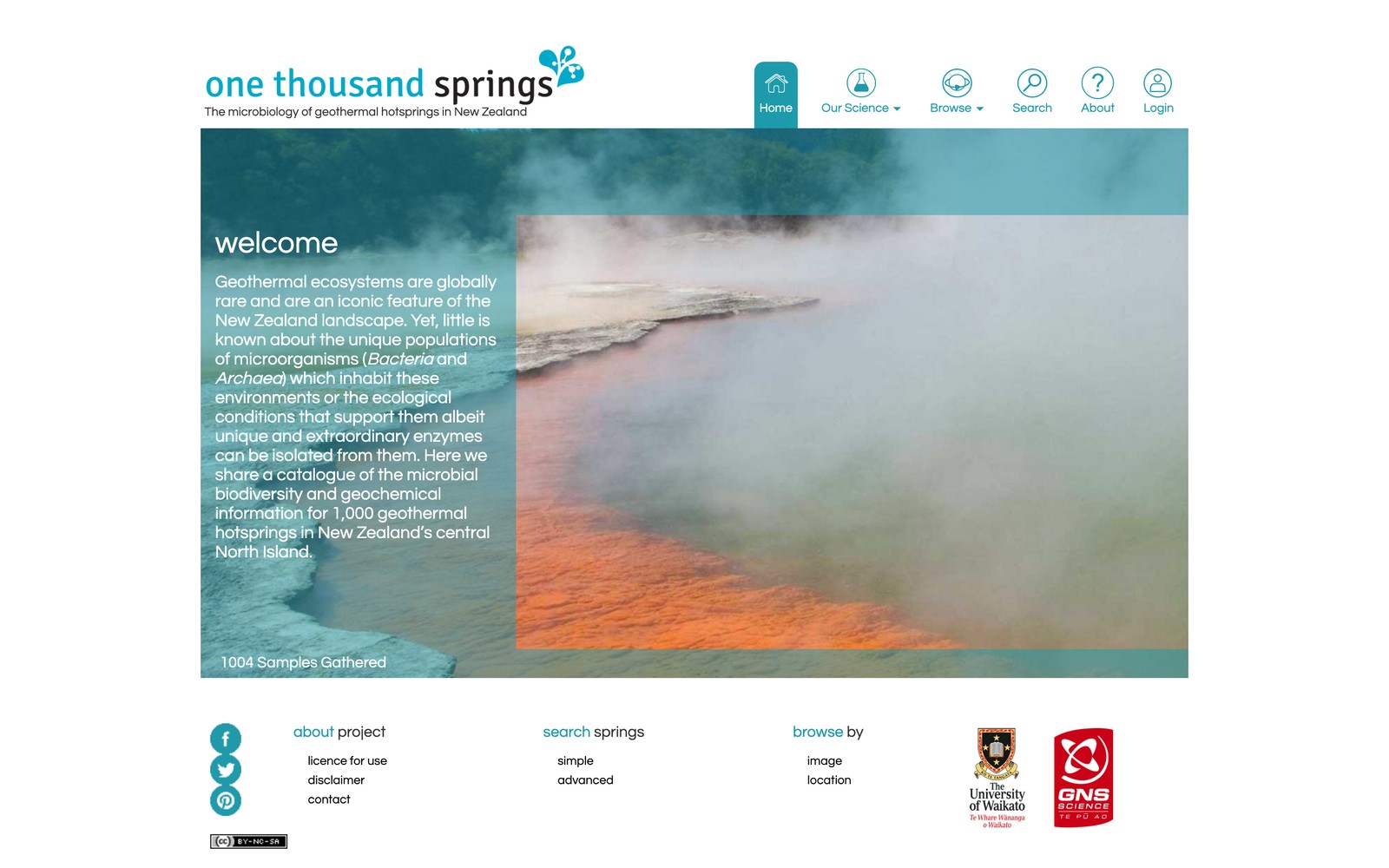
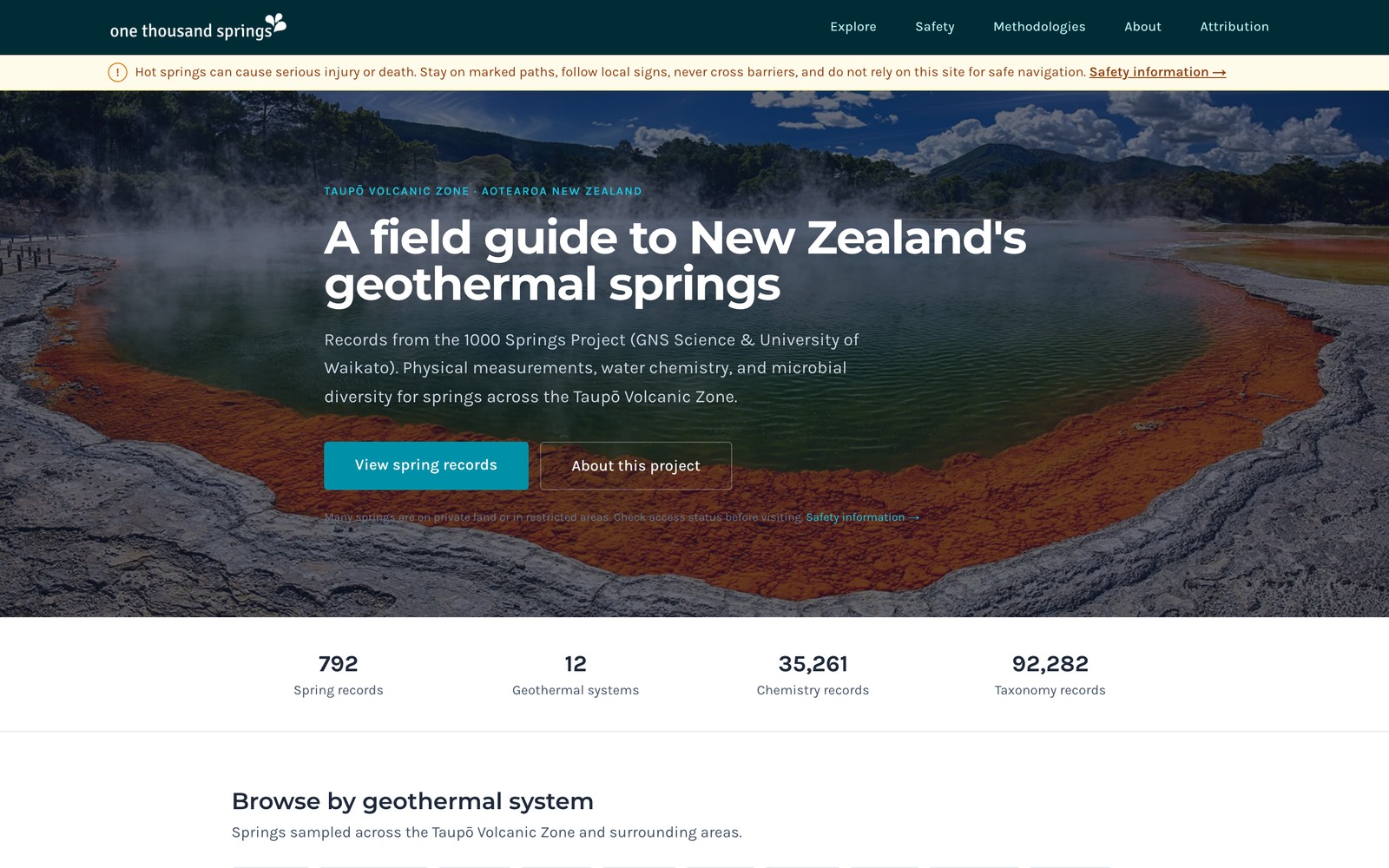
Drag the handle. The same project, ten years apart.
We kept the science and rebuilt everything around it.
Not one record changed. What changed is how it reads, how it feels, and how far you can explore it.
Free to everyone, no account needed
Every spring, every measurement and every microbial record is there to browse the moment you arrive, exactly as the project's open licence intends.
The warning that never leaves the page
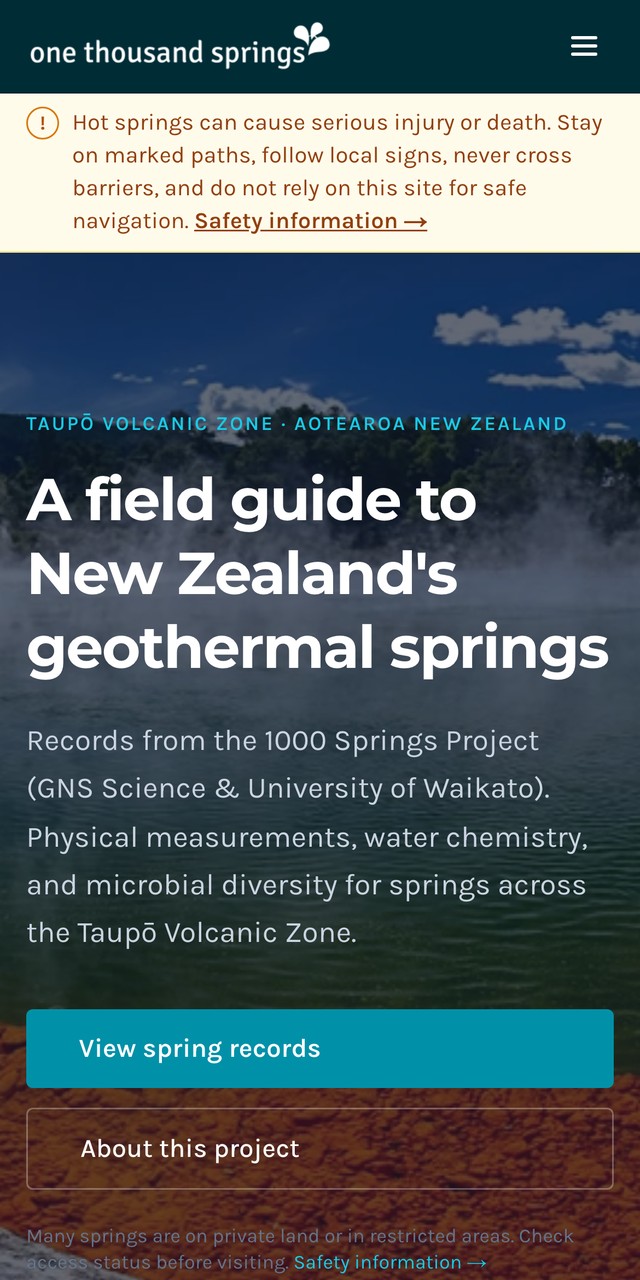
The old site was right to lead with safety. We made that promise stronger: a calm, always-visible banner on every page, backed by a full safety guide, so the message travels with you instead of being dismissed once.
One dataset, four audiences
Tourists, students, researchers and microbiologists each get told, in plain language, what is here and why it is for them. The science stays rigorous. The reading gets easy.
Fast on any screen
A proper mobile layout, modern typography, accessible contrast and quick loads. The site finally looks like it belongs to the science inside it.
Where most visitors actually arrive.
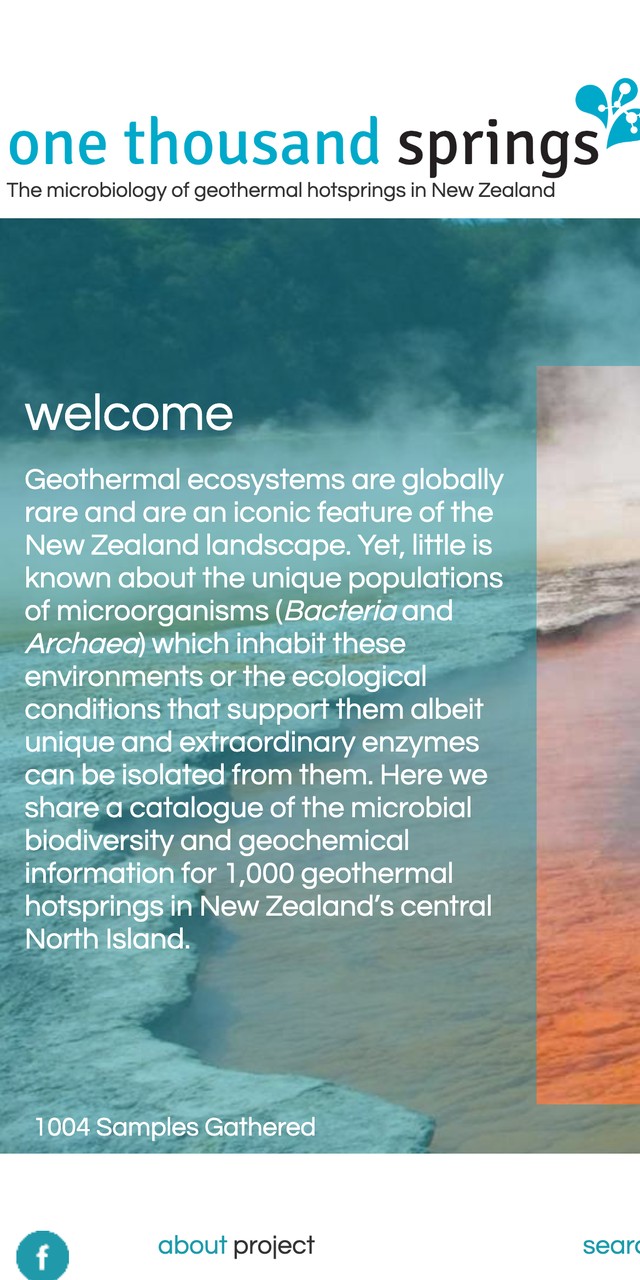
Most people meet a site like this on a phone, standing somewhere near a spring. The old layout was a desktop page scaled down. The new one is designed for the hand it lands in.
792 springs, one live tool.
The centrepiece of the rebuild is a real interactive explorer, not a table dump. It opens on a pH versus temperature plot of every spring in the dataset, so the shape of the whole collection is legible in one glance. Then you play with it.
- Recolour the plot live by geothermal system, temperature, pH or distinct feature
- Filter by analyte (iron, arsenic, methane and more), temperature range and pH range
- Flip between a searchable list and a clustered satellite map of the Taupo Volcanic Zone
- Open any spring for its measurements, chemistry and microbial taxonomy, linked back to the source record
The data belongs to the 1000 Springs Project (GNS Science and the University of Waikato) and is used under a Creative Commons BY-NC-SA 4.0 licence. Ripple designed and built the rebuilt website and the explorer shown here; the underlying dataset and its findings are the project's own. Every record links back to its source.
Good work deserves a website that shows it.
We take substance that is hidden behind a dated site and rebuild it so people can actually reach it, on any screen, without friction. If that sounds like your business, let's talk.